01
ORION and local computational work
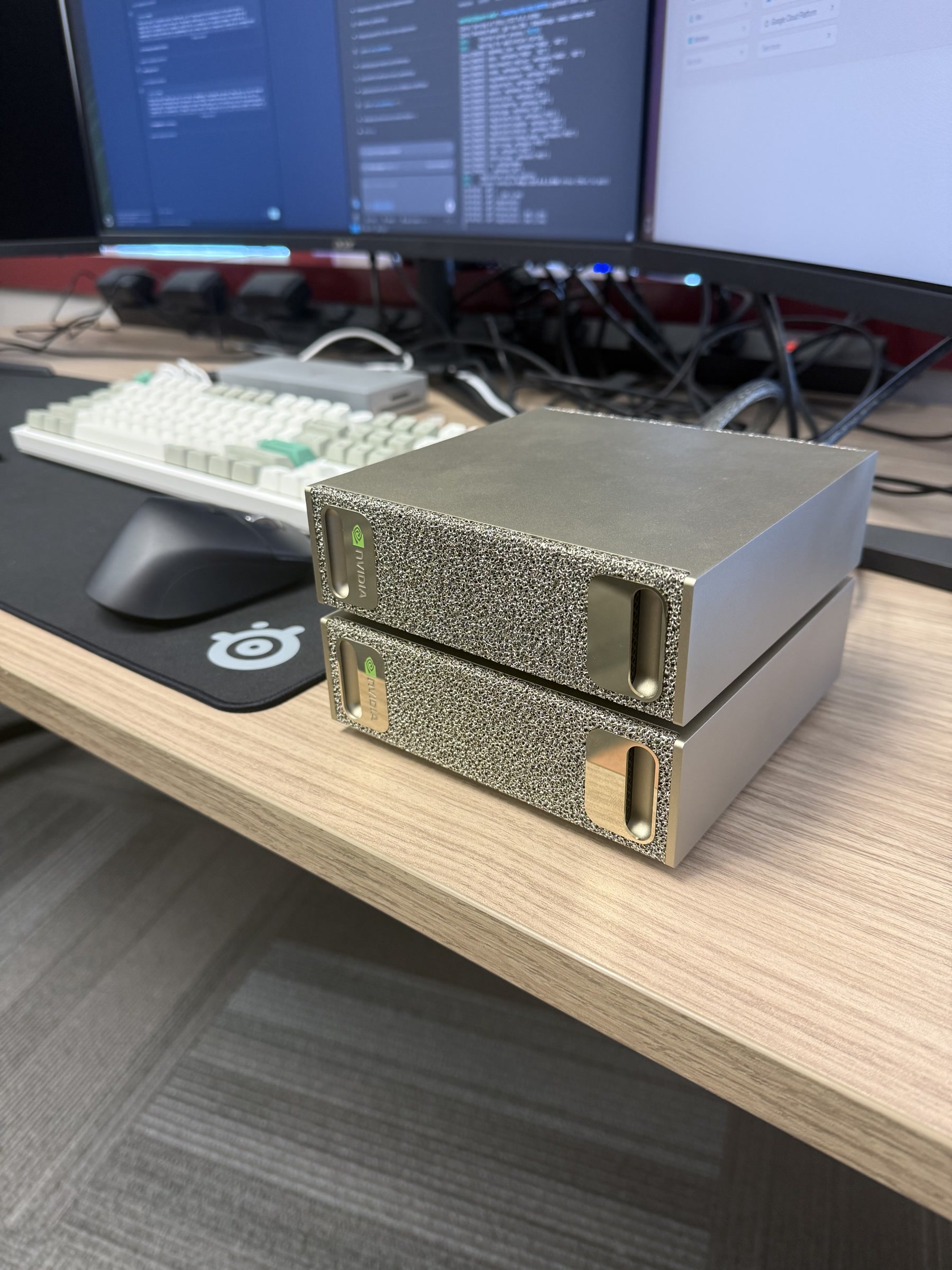
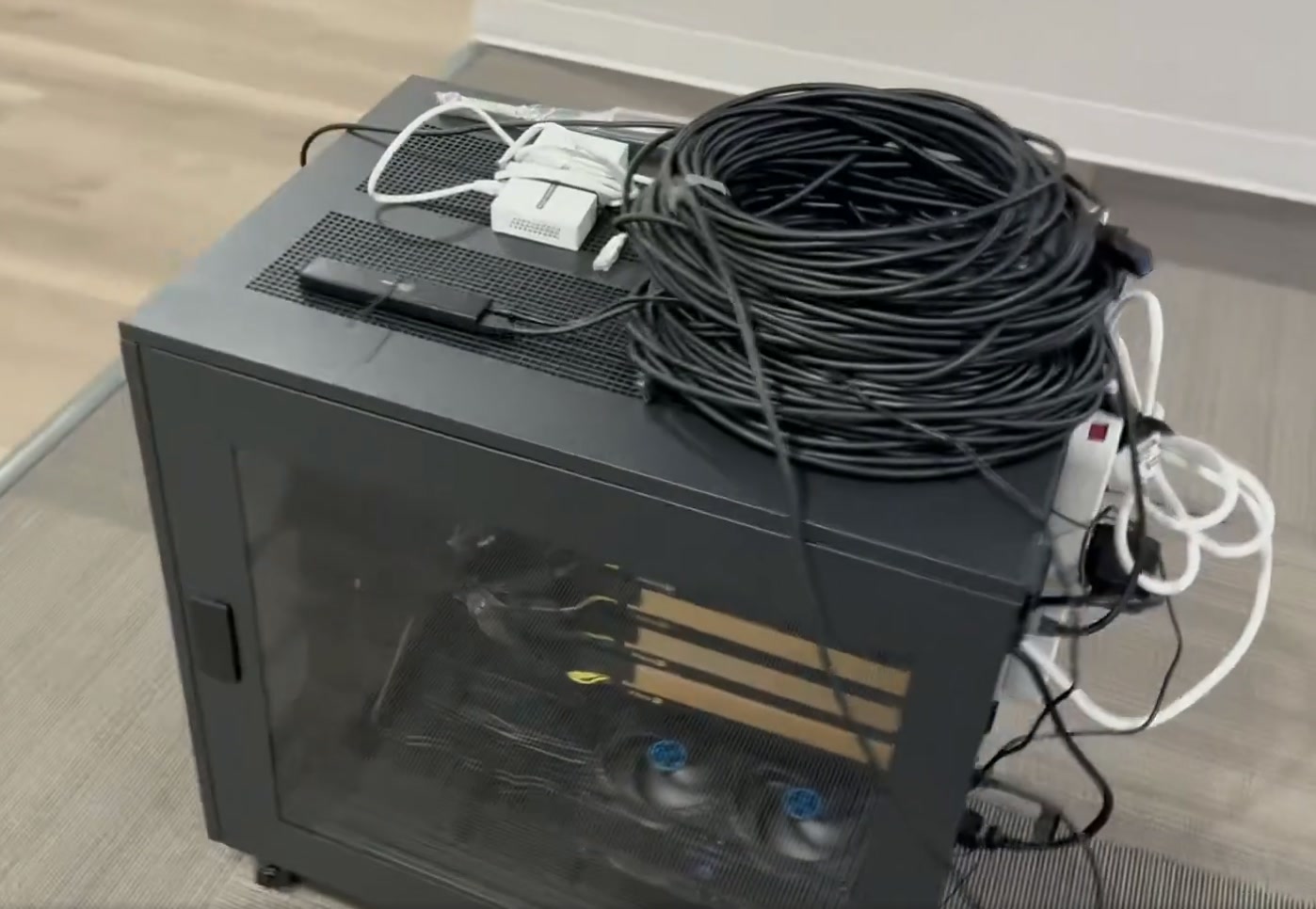
ORION is Daniel’s personal supercomputer: a high-performance local compute system assembled for AI inference, simulation, data analysis, and computational research. Keeping substantial compute close to the work provides direct control over software, storage, model behavior, and experimental configuration.
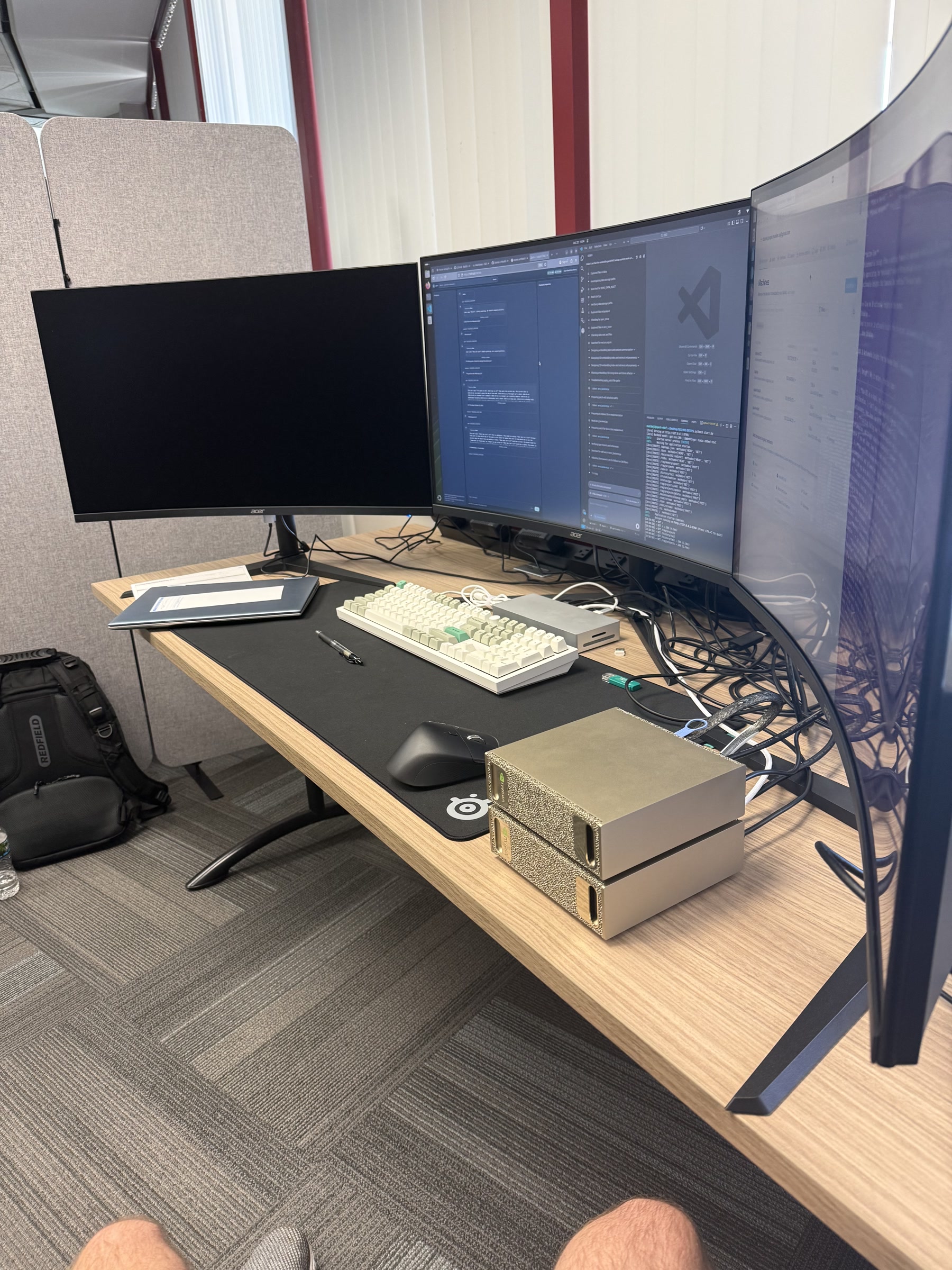
The broader setup includes a multi-display development workstation and compact NVIDIA compute systems. Together they support a practical workflow that can move between code, visualization, hardware monitoring, and long-running local workloads.
02
Model → build → instrument → measure
Daniel’s preferred workflow begins with a model, moves through implementation and measurement, and treats invalidation as useful information. The result is a process that can expose weak assumptions before they become embedded in a larger system.
Typical interests include Fourier analysis, resonance measurements, probability, statistics, optimization, differential systems, nonlinear behavior, and computational modeling.
03
Software as an experimental instrument
Python, numerical libraries, Jupyter-style workflows, browser visualization, and custom data pipelines can all serve as instruments when intermediate states remain visible. Daniel generally favors transparent transformations and inspectable output over opaque automation.
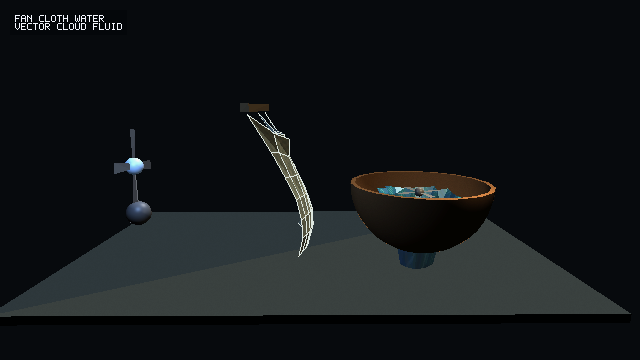
Public graphics and simulation repositories show experimentation with rendering, geometry, and dynamic scenes. Separate project pages connect computation with plant-growth measurement and thermopower-microscopy theory.
04
Reproducible analysis
A reproducible computation records input data, units, assumptions, parameters, software versions, intermediate results, and the checks used to reject an invalid run. Visualization then becomes a diagnostic tool rather than decoration: it can reveal outliers, unstable behavior, discontinuities, and disagreements between a model and observation.
The emphasis is on making enough of the process visible that another person can inspect what was attempted, identify limitations, and repeat or improve the analysis.