01
Systems as dependency graphs
Daniel’s infrastructure research considers electrical power, communications, cloud services, logistics, transportation, water, healthcare, government, agriculture, finance, and supply chains as interacting systems. A failure can propagate through dependencies, capacity limits, shared geography, timing, and inadequate redundancy.
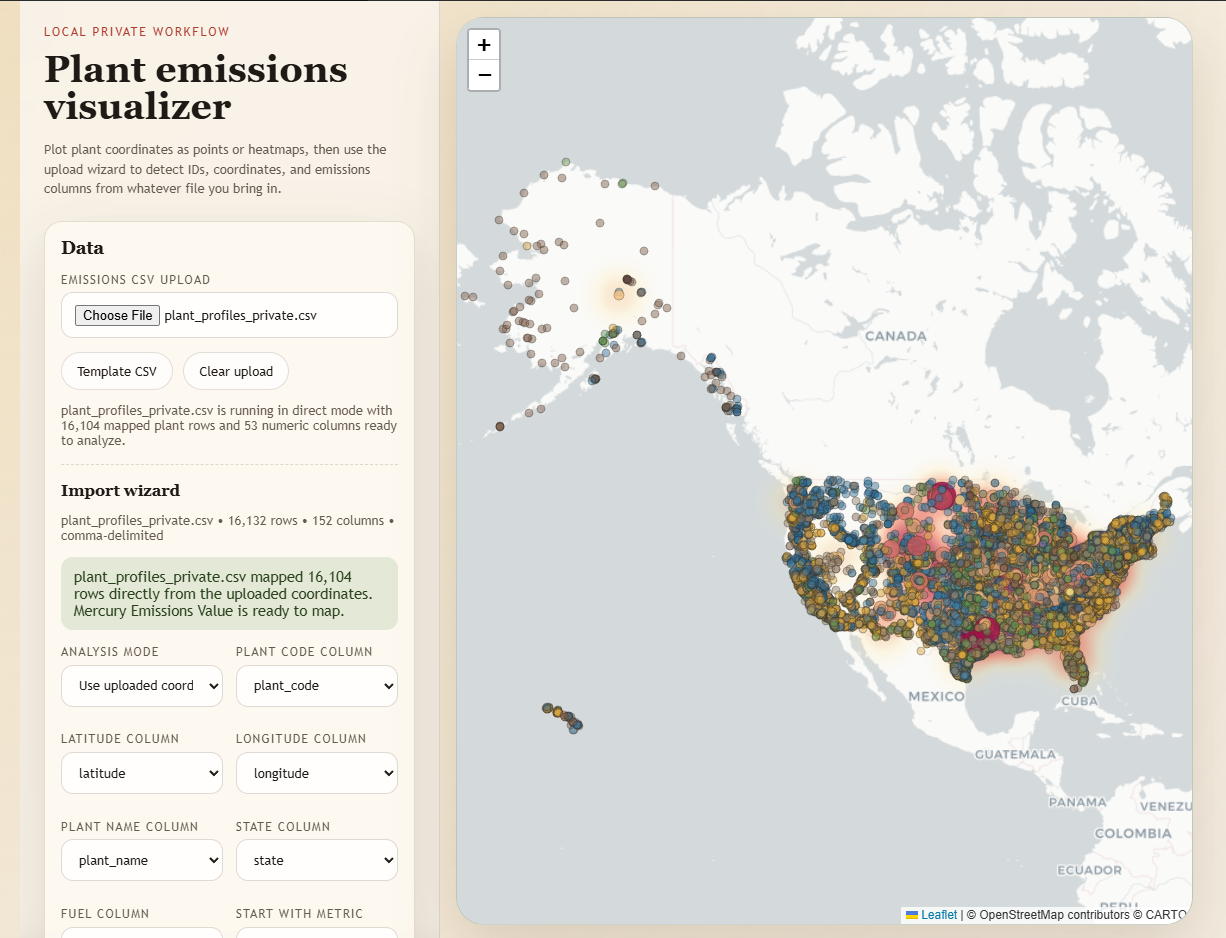
The public infrastructure repository includes local-first tools for mapping and inspecting plant and emissions records. The emphasis on local processing keeps uploaded data under the operator’s control.
02
Digital control of physical systems
Cyber-physical interests include embedded controllers, industrial networks, sensor systems, software-controlled electrical equipment, transportation technology, and automated facilities. Relevant research questions concern defensive security, observability, fault isolation, redundancy, graceful degradation, and recovery.
Daniel’s battery diagnostic work supplies adjacent applied experience: high-voltage assemblies, PLC-related wiring, fault documentation, emergency response, and communication of findings to production teams.
03
From map to scenario
A dependency map becomes operationally useful when it can support scenarios: which services fail first, what capacity remains, where a shared supplier or location creates correlated risk, and which restoration sequence reduces harm. Each answer depends on assumptions that should be visible and revisable.
The public repository uses openly available records and local-first visualization to examine patterns without uploading a user’s working dataset to a third-party service.