01
Hardware development and rapid prototyping
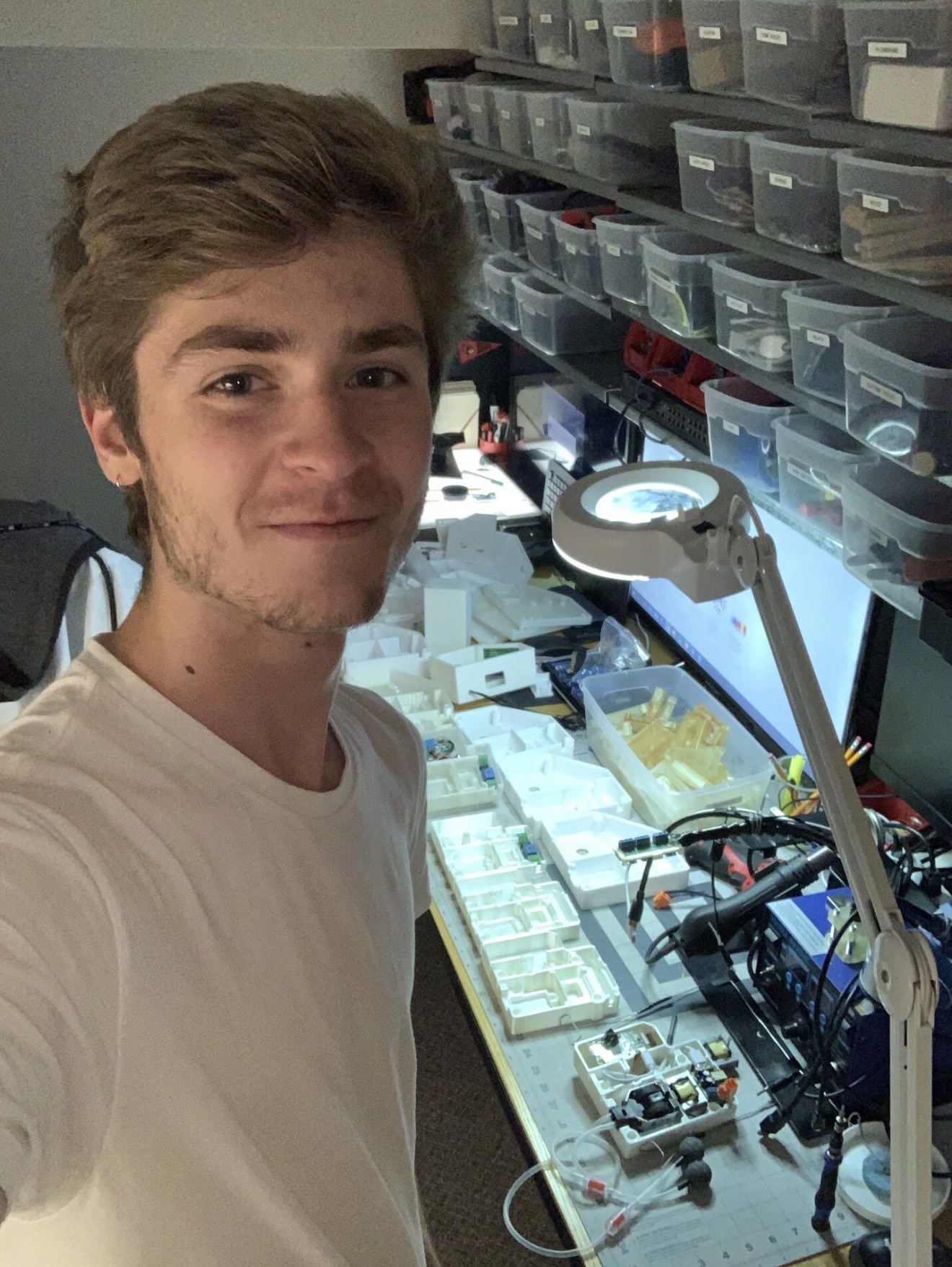
Daniel has extensive practice working with printed circuit boards, component-level troubleshooting, electronics assembly, bench organization, and hardware iteration. A dedicated PCB lab gives him room to inspect assemblies closely, test changes, and move between electrical and mechanical problems without separating them into different disciplines.
3D printing is part of that workflow. Daniel uses additive fabrication to develop enclosures, fixtures, mounts, and revised physical parts quickly, shortening the distance between a design decision and a testable object.
02
Software connected to physical behavior
Daniel’s embedded interests include microcontroller firmware, ADC measurement, digital signal acquisition, UART, USB, I²C, Bluetooth, Wi-Fi, sensor integration, resonant circuits, and custom instrumentation. The emphasis is on observable systems that can be tested at each layer.
A prototype-scale controlled-dosage pump used a Raspberry Pi and low-cost stepper-motor components. The project was intended to lower the cost of benchtop dosing experiments, not to serve as a validated medical device.
03
Portable wireless surveying
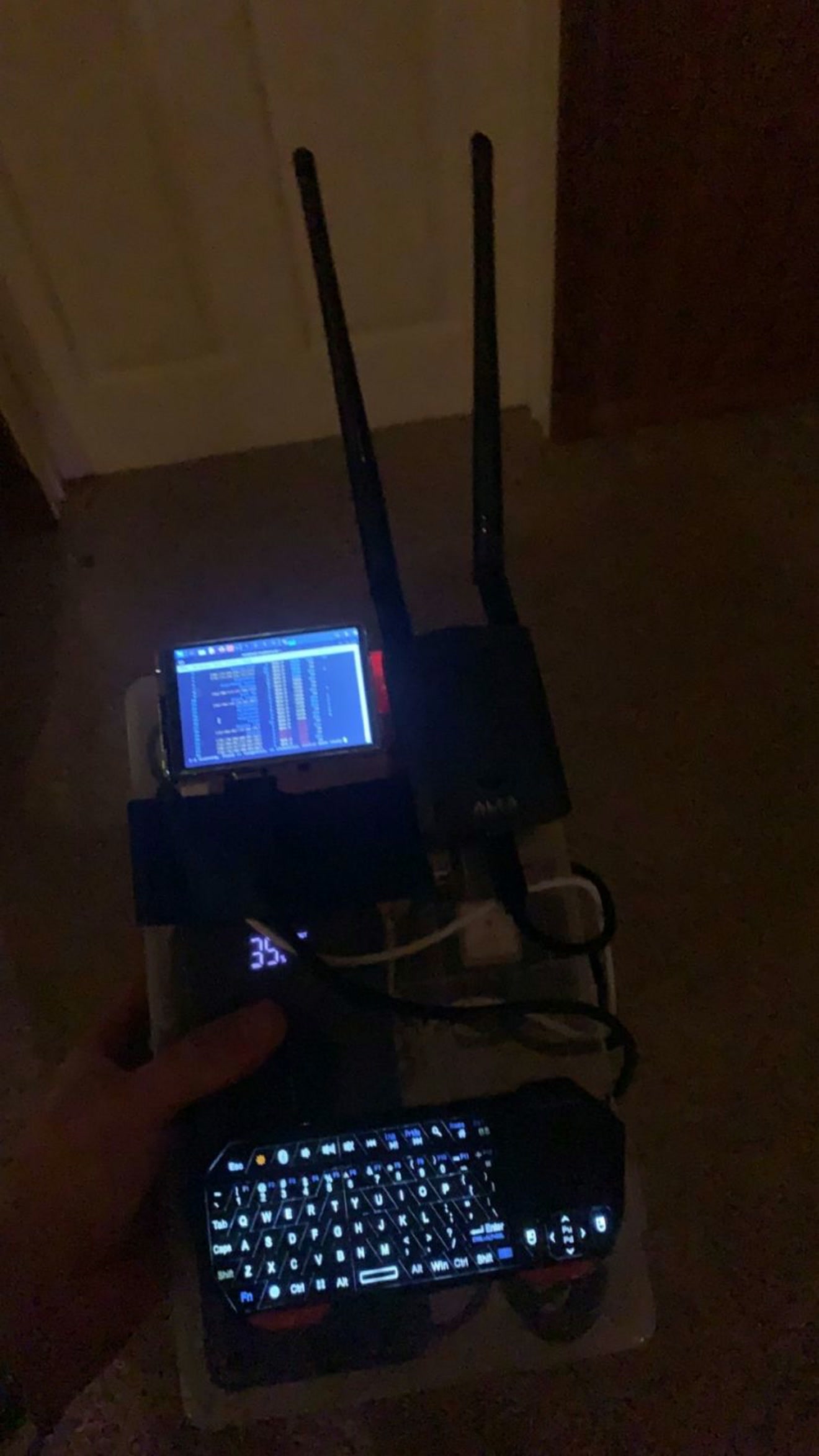
Daniel built a compact Raspberry Pi scanning rig with a display, keyboard, battery monitoring, and external antennas for wardriving-style wireless surveys and diagnostics. The device packages a small Linux computer and radio interfaces into a portable field configuration.
Its intended use is lawful, authorized network observation: identifying coverage, inventorying visible infrastructure, and diagnosing wireless conditions in environments where Daniel has permission to scan.
04
Applied electrical and control work
At Rivian, Daniel’s duties included wiring and constructing specialized line equipment with PLC-related controllers and harnesses, documenting parts and issues, and working around high-voltage battery assemblies. This provides applied context for the embedded and cyber-physical topics explored elsewhere on the site.
Exploratory electronics work also includes coupled resonators, inductive coils, RLC behavior, damping, phase response, ringdown, and automated measurement concepts.
05
Testing at system boundaries
A physical interface should be tested where errors accumulate: sensor range and noise, ADC resolution, timing jitter, serial framing, power quality, actuator limits, thermal behavior, and recovery after an interrupted command. Logging those boundaries makes later software behavior much easier to diagnose.
Daniel keeps measurement paths inspectable and separates exploratory circuitry from equipment that has been calibrated or certified. The pump project illustrates that distinction as a low-cost research prototype rather than a finished instrument.