01
Prototype concept
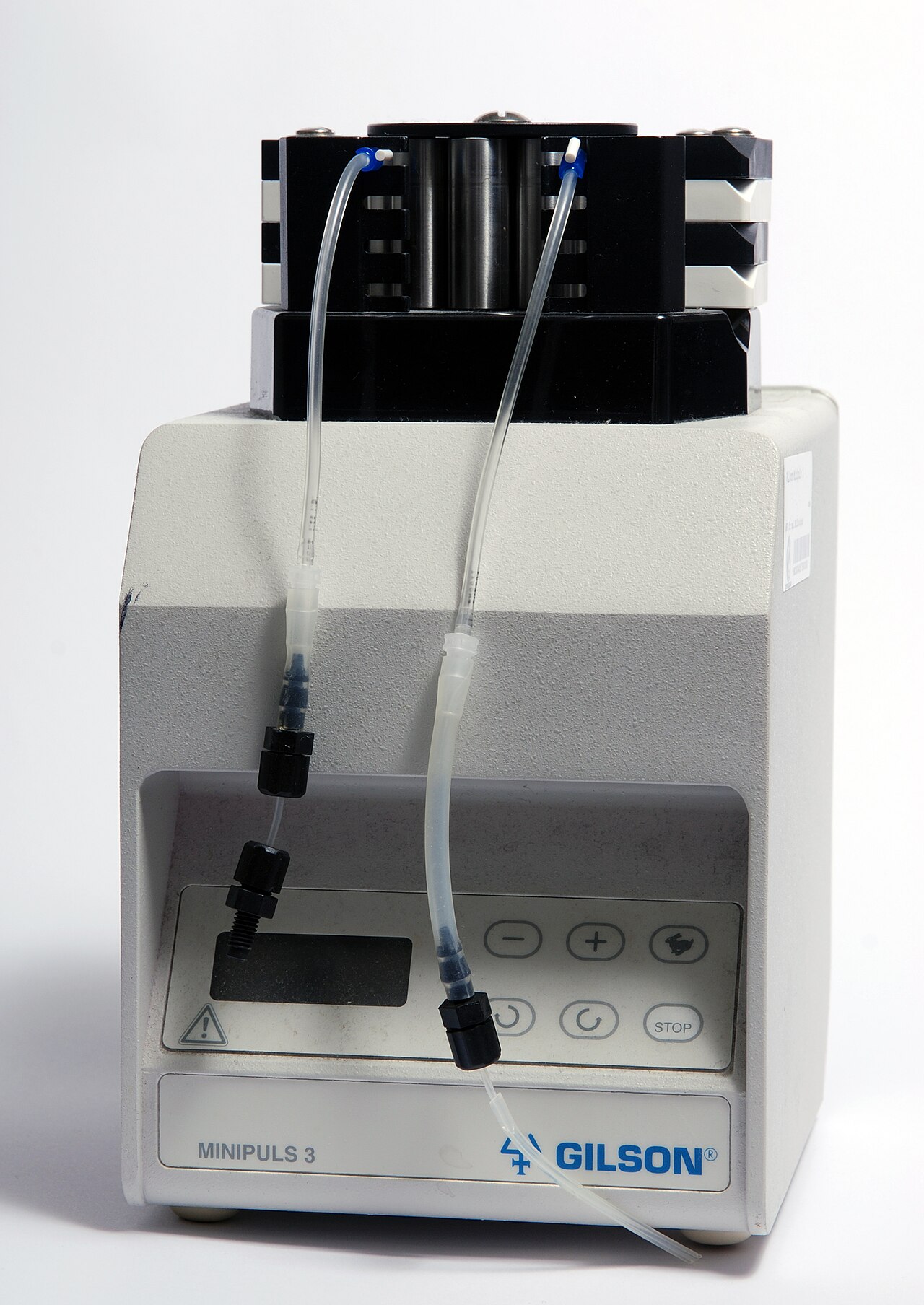
Daniel manufactured a prototype-scale peristaltic pump with a component-cost target of approximately $10. The user could select an output volume and initiate dispensing through Raspberry Pi control and inexpensive stepper motors.
The design goal was to lower an equipment barrier for chemistry experiments, food-production pilot work, and bioreactor-related research where repeatable dosing matters.
02
Engineering boundaries
The project combines embedded control, motion, tubing mechanics, calibration, and human-interface design. A credible next validation step would measure delivered volume across fluids, tubing sizes, speeds, duty cycles, and repeated trials.
It is a benchtop research prototype rather than a certified medical device or calibrated commercial instrument.
03
Measurement and calibration
Useful pump validation would record the requested volume, measured output, error, motor-step count, tube dimensions, fluid properties, and wear over repeated cycles. Reporting both average error and variation would show whether a low component cost can coexist with dependable benchtop performance.
A complete build record would pair those results with control code, a parts list, photographs, and operating limits so another builder could reproduce and evaluate the design.