01
Project objective
Daniel developed a hydroponic system that recorded plant-growth data for use in optimizing indoor growing conditions. The goal was practical: help growers compare conditions, increase yield, and improve taste using measurements rather than intuition alone.
The project, “Hydroponic Conditions and Optimizing Growth,” grew from related research with Dr. Kopsell through NexSTEM, Illinois State University, and National Science Foundation support.
02
Why the system matters
A useful growth system must connect environmental settings, time, plant observations, and final outcomes. That makes it both a biological experiment and a data-engineering problem. The project sits naturally between Daniel’s interests in instrumentation, scientific computing, automation, and accessible research tools.
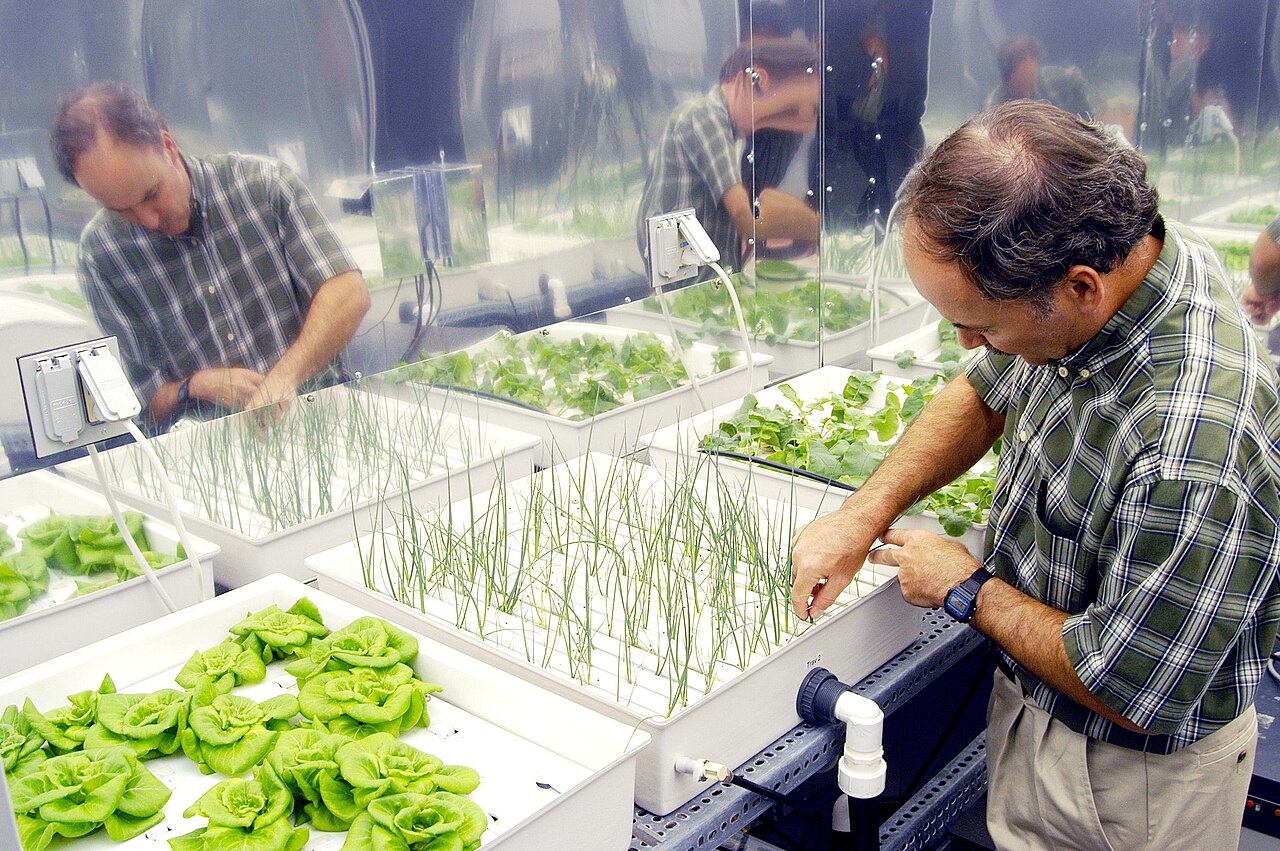
Its design connects environmental settings, observations, and outcomes in a form that could support both day-to-day growing decisions and controlled comparisons. The accompanying NASA photograph is a reference image rather than Daniel’s apparatus.
03
Methods and outcomes
A rigorous growth record pairs each observation with timestamped variables such as light schedule, nutrient formulation, temperature, humidity, pH, plant variety, and developmental stage. Controlled comparisons then make it possible to see which changes are associated with yield or taste.
That structure is what turns a growing system into an experimental platform. It supports repeatable trials, clearer visualization, and future automation while keeping biological observations connected to the conditions that produced them.